A recent Wisconsin Examiner article examines renewed Republican criticism of the Knowles-Nelson Stewardship Program and finds that many of the claims driving opposition are not supported by data. A small group of lawmakers, largely from northern Wisconsin, argue the program has conserved too much land and reduced local tax base, and are using those claims to justify letting the program expire in 2026.
Created in 1989, Knowles-Nelson helps local governments and nonprofit organizations protect land for public access, outdoor recreation, wildlife habitat, and working lands. Despite broad public support, lawmakers removed Governor Tony Evers’ proposal to renew the program for ten years with $100 million in annual funding from the state budget. Other proposals would significantly scale back funding or add new legislative approval requirements that conservation advocates warn could slow or block projects altogether.
However, public lands data tells a different story. Knowles-Nelson accounts for only a small share of conserved land statewide, making up less than five percent even in districts with large amounts of public land and just over one percent on average across Wisconsin’s Assembly districts. County forests, federal lands, and other DNR holdings make up far larger portions of Wisconsin’s public land base.
Data also shows the program’s impact is not concentrated in northern Wisconsin. Assembly districts in Dane County, central Wisconsin, the Baraboo area, and suburban Waukesha County all rank among those with the highest levels of Knowles-Nelson–protected land. Since its creation, the program has invested in nearly every Assembly district in the state.
That gap between the rhetoric and the reality helps explain why the Stewardship Program has become a political target.
“Knowles-Nelson becomes like sort of the straw man argument. If legislators stood up and said, ‘I don’t think that we should have public land in the way that we do, we should reduce our public land portfolio,’ that would be a terribly unpopular position,” noted Charles Carlin, director of strategic initiatives at Gathering Waters.
With Knowles-Nelson set to expire in 2026, the data offers important context as lawmakers debate the program’s future and whether it will continue serving communities across Wisconsin.
This article was also published on Urban Milwaukee.
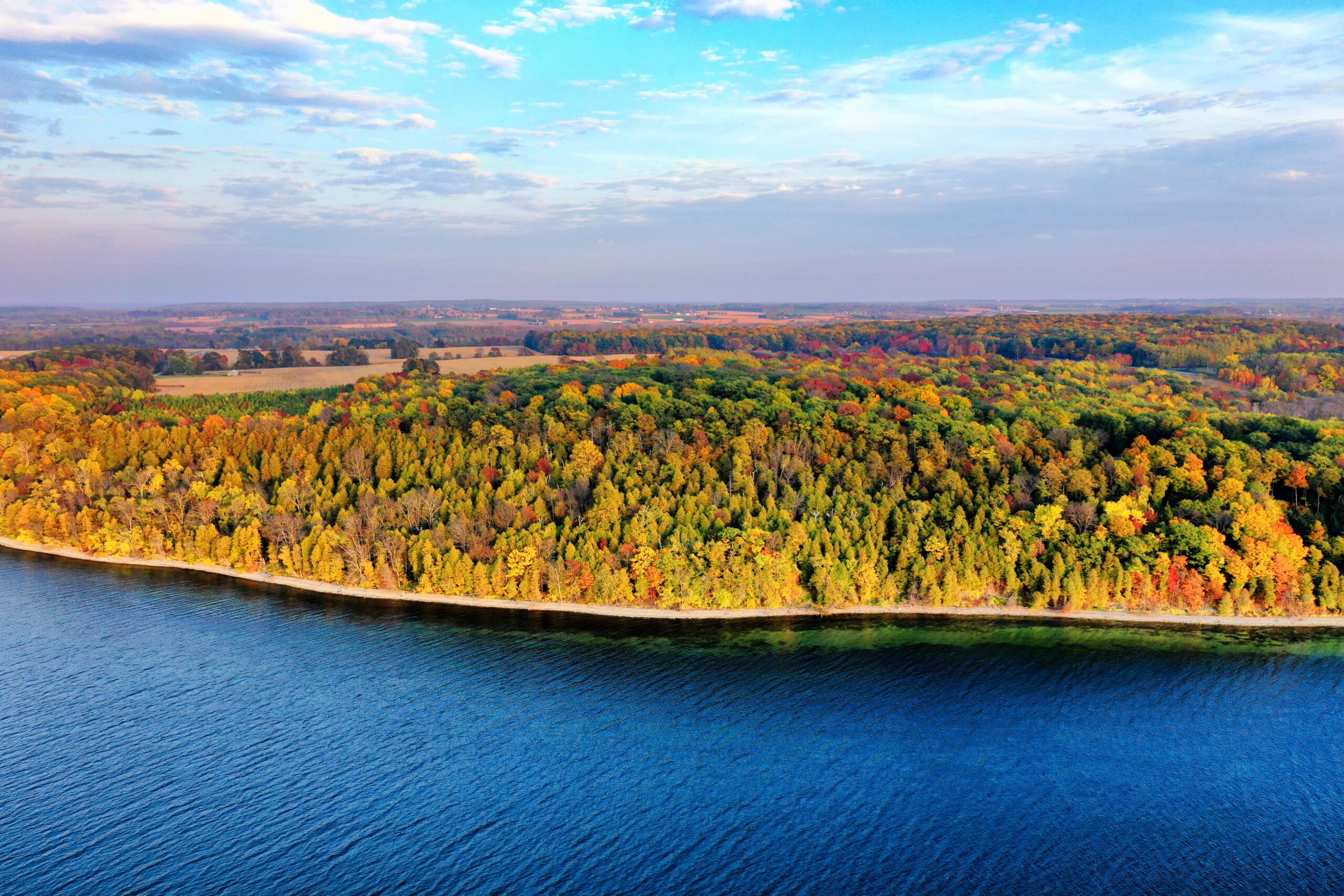
Featured image by Joe Taylor for Door County Land Trust