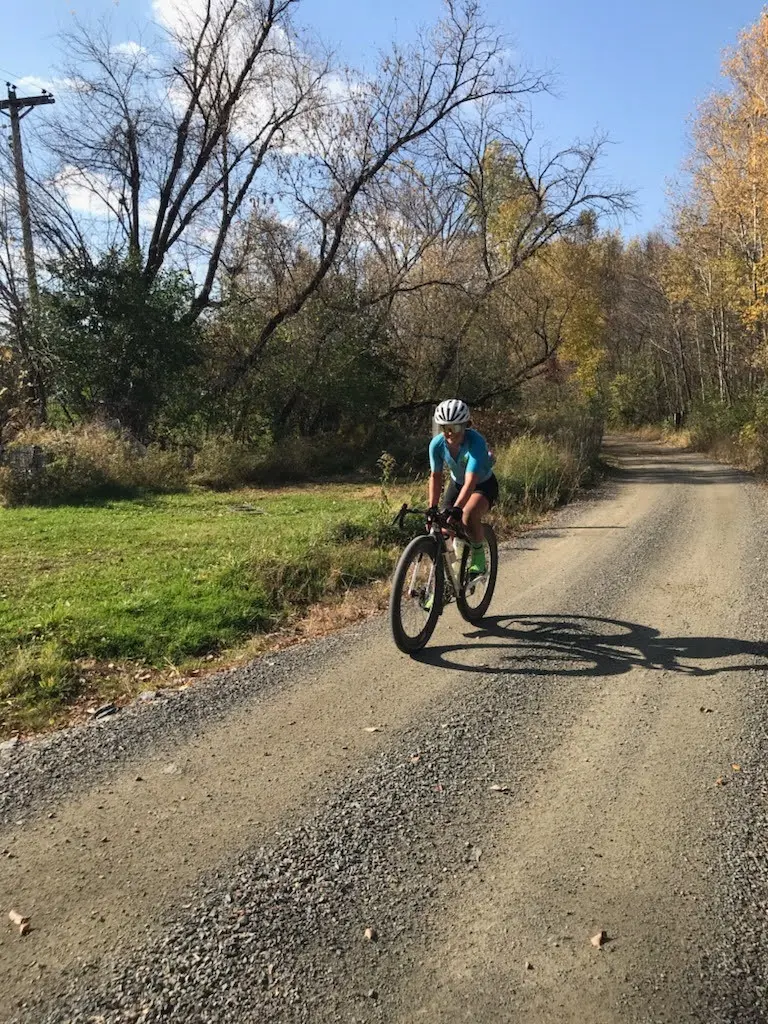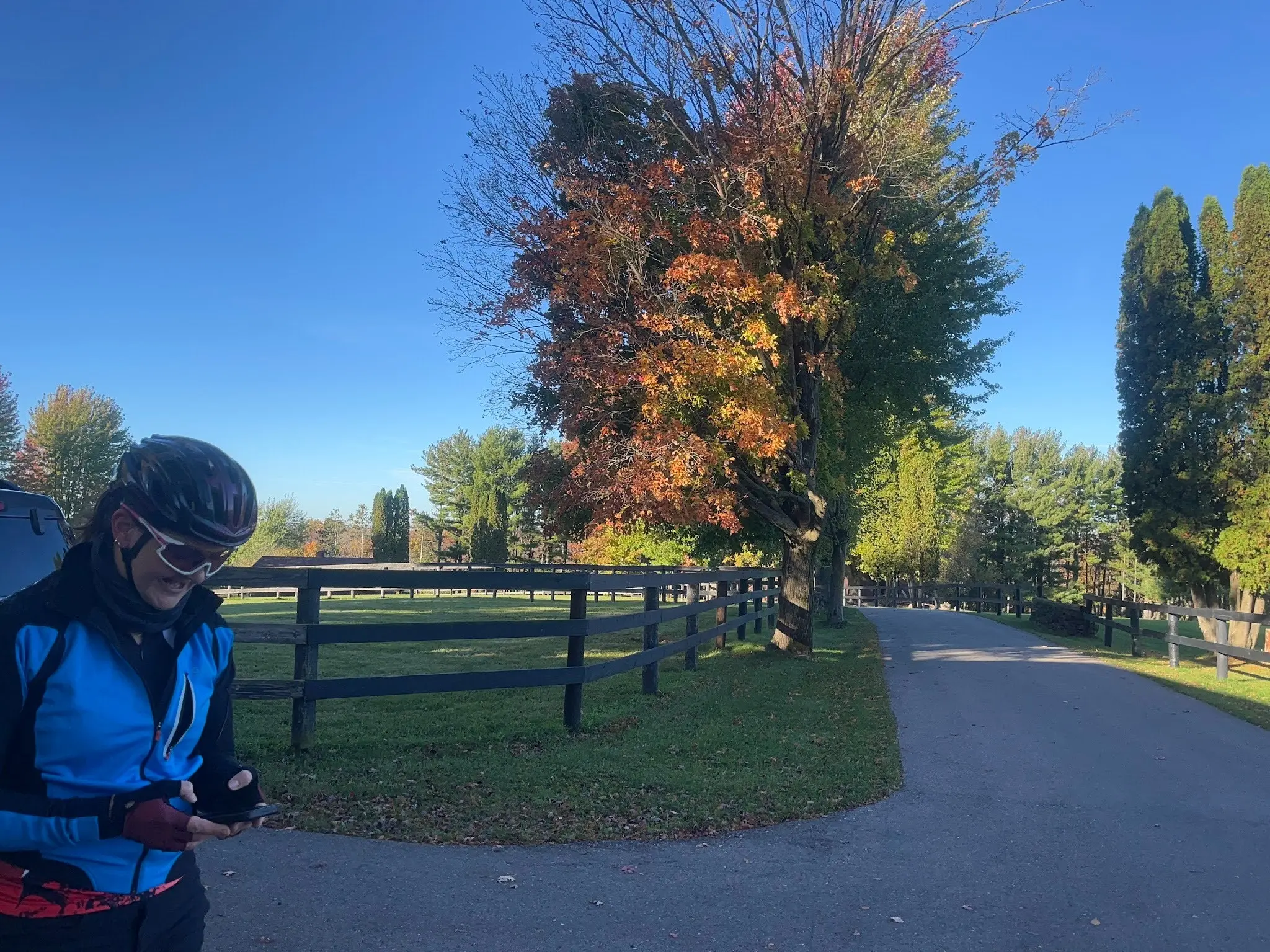
I began my ride this morning by finishing the Cheese Country Trail from Calamine into Mineral Point. Thank you Tri-County Trail Commission and Tri-County ATV Club for the great trail maintenance!
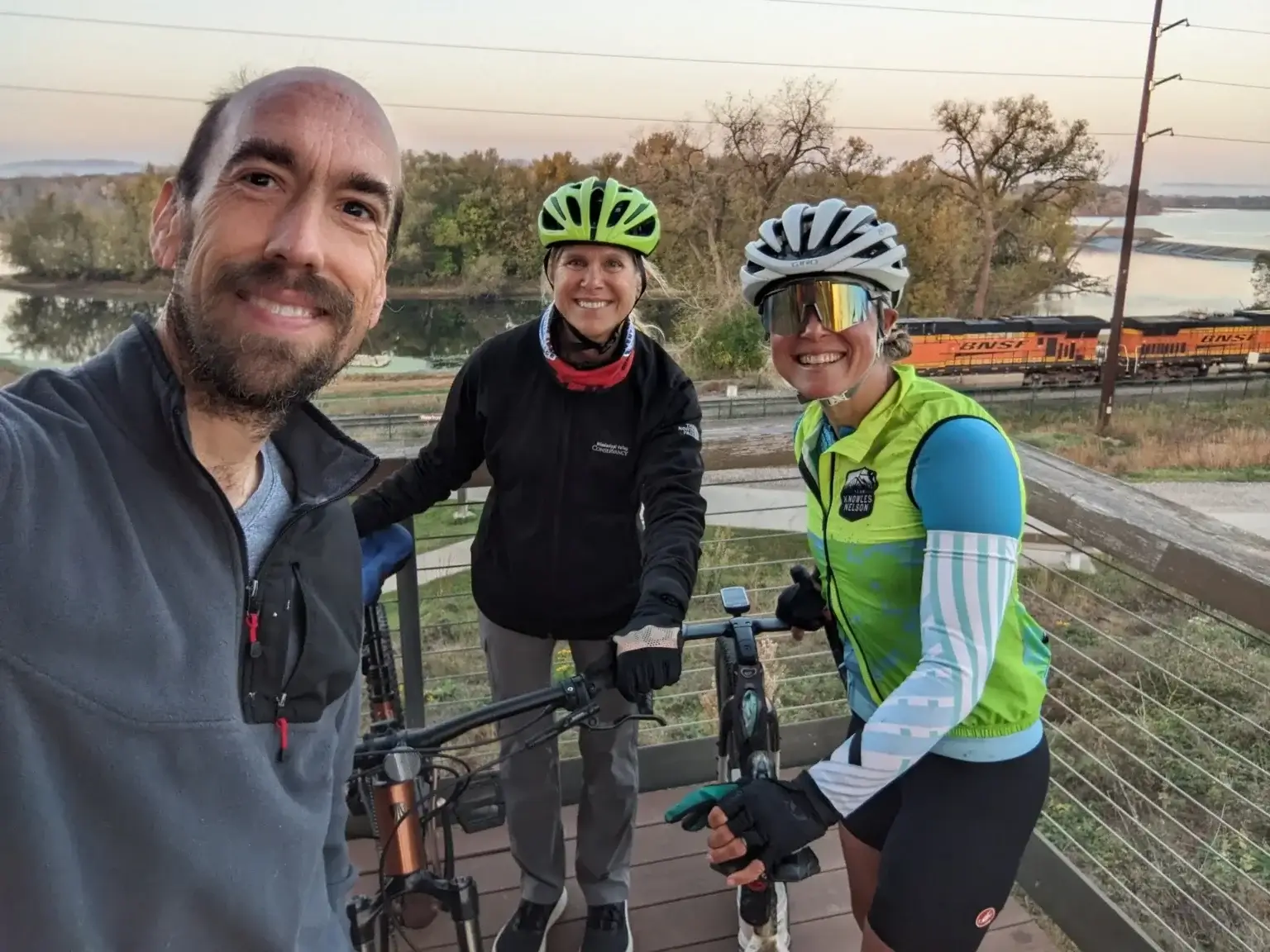
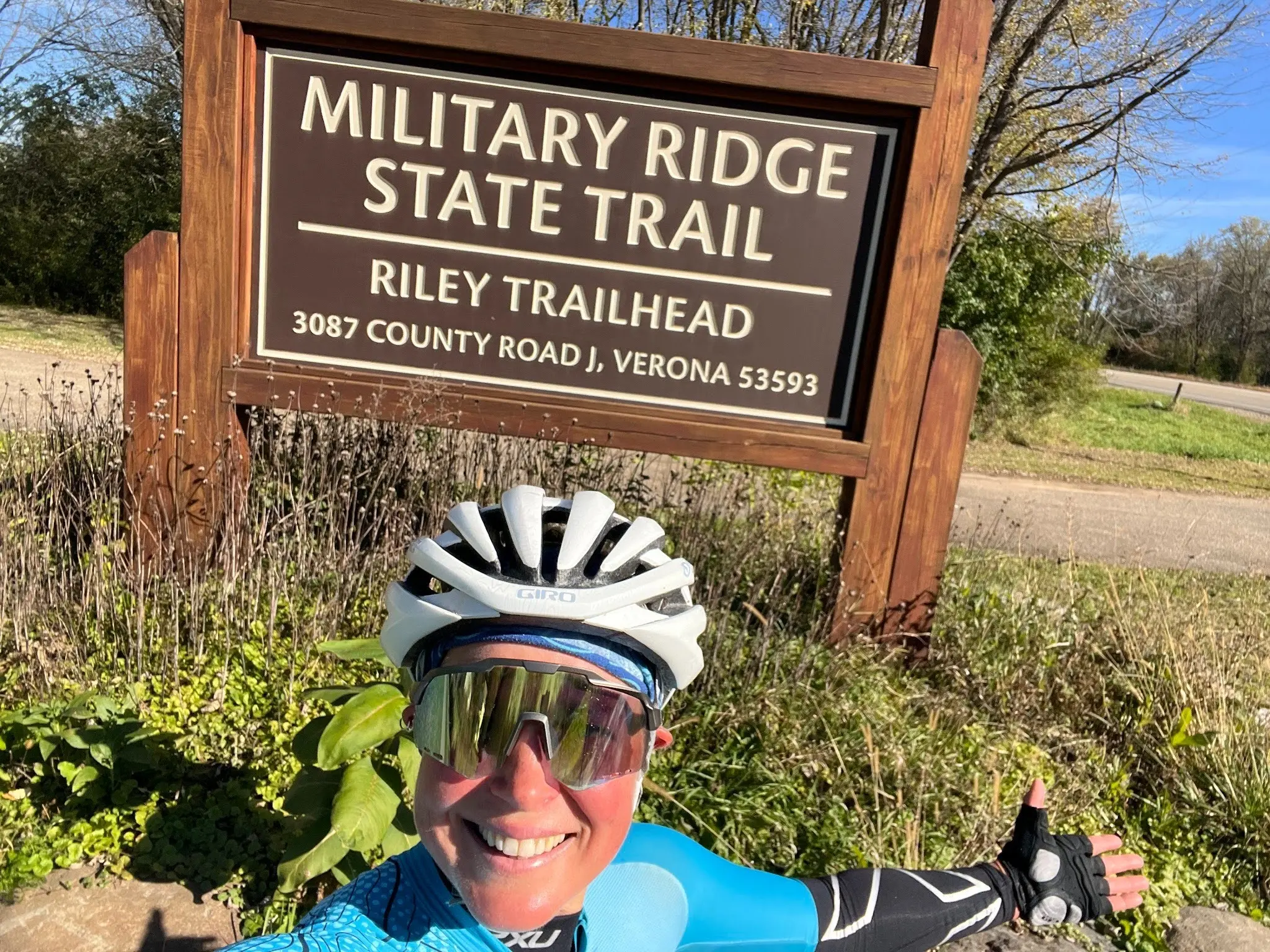
I picked up the Military Ridge State Trail in Dodgeville, where I also met up with Jen Filipiak, the Executive Director of the Driftless Area Land Conservancy (DALC), who joined me for a few miles and showed me some of the properties DALC has helped preserve along the trail. DALC is an accredited land trust that has worked for more than 25 years to permanently protect the natural and agricultural landscapes of Southwest Wisconsin. They work with willing landowners, communities, and conservation partners to protect forests, prairies, waterways, farms, and other important places.
The two properties we visited were both conservation easements, which (I learned), allow landowners to continue to maintain ownership or sell land while maintaining the quality of the land through restrictions on how it can be divided (or not) and used in the future. The specific restrictions are up to the landowner, but can allow agriculture (or not), sustainable forestry (or not), and specific recreational uses. I wasn’t aware of how much land trust organizations work on conservation easements, which allow for private ownership and maintain valuable uses of the land, while preserving the rural character of the land, expanding habitat for local wildlife, and maintaining ecological ecosystems.
Another important part of conservation easements is that they are voluntary, they are entered into because a property owner wants their land protected now and in the future, and they “follow the land” in that they are transferred from owner to owner as they land changes hands. It was interesting to hear Jen talk about not wanting the conservation easement language to be too prescriptive or inflexible, because they have to think so far in the future to multiple owners and how they might want to use the land. “We might not know what agriculture looks like in the future,” said Jen. She talked about how, like the Native Americans, we want to think seven generations in advance about how we can maintain the value and quality of the land, without being overly restrictive in how future generations might use it.
The Knowles-Nelson Stewardship Program has been an important part of making this kind of work possible. DALC has received Knowles-Nelson support for several land protection projects, including Wintergreen in Spring Green, Big Rock Nature Preserve in Highland, and their first preserve, Erickson Conservation Area. Most recently, Knowles-Nelson funding helped make possible DALC’s 245-acre Wintergreen acquisition, which is a great demonstration of the impact of conservation limits in Knowles-Nelson. Jen explained to me how the original amount available through Knowles-Nelson ($250,000) wasn’t enough for their small organization to be able to finance and make the Wintergreen project possible. The landowner really wanted to make it happen, as did the community, it was just resources that were standing in the way.
After the Wisconsin Supreme Court’s decision in 2024 allowed larger conservation projects to go through, DALC was able to acquire a much larger Knowles-Nelson grant that made this purchase possible, to the benefit of everyone, including future generations.
DALC’s work also connects to outdoor recreation. The Wintergreen site sits above the Lower Wisconsin State Riverway and is planned as a future gateway to the Driftless Trail, a planned 100-mile trail and conservation corridor that will connect communities and protected landscapes throughout the region. Rather than simply creating a trail, the vision is to create lasting connections between people and the land while protecting the places that make recreation in the Driftless possible.
If people would like to support DALC’s work, please visit: https://driftlessconservancy.org/
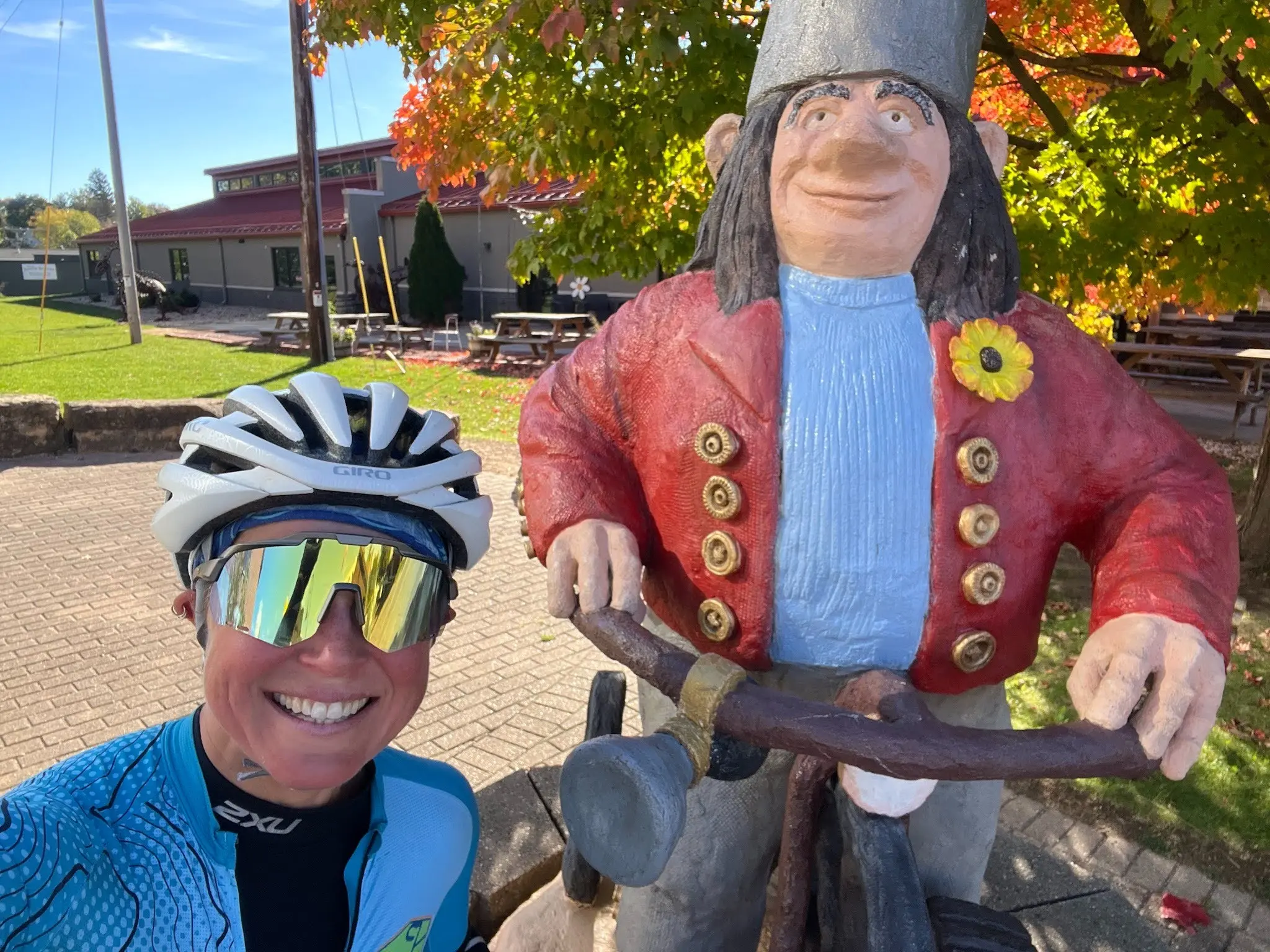
After bidding adieu to Jen, I continued my ride through Mount Horeb, which has great Scandinavian character and a gnome on a bicycle(!) and Verona, before reconnecting with Madison’s Cannonball bike path.
Because of all the preserved green space along the trail, you hardly notice you are in the city. Environmental corridors also provide a way to protect important lands and provide migratory pathways for wildlife, while also fitting into a dense, urban layout. I finished my ride along the east side of the Monona Lake Loop, an iconic and enjoyable ride along the east side of Lake Monona that is popular with cyclists, runners, walkers, and recreaters of all stripes – especially on glorious fall days like this one!
* Since I forgot to include a donation option yesterday – consider donating to the Tri-County ATV Club to support completion of the two bridges that are out and continued maintenance of the great trail system they have! https://islandpondatv.com/membership
– Sarah
Today at a glance
Day 19 | Platteville to Madison
Mileage: 75
Trails Covered
Explore Nearby
Dunn County, WI | Managed by: Landmark Conservancy
Originally intended to be a nuclear power plant site, the Meridian Barrens were protected and made public through Knowles-Nelson funding. Visitors can now hike, fish, and hunt on the land.
Eau Claire, WI | Managed by: City of Eau Claire
Eau Claire's Pheonix Park boasts a walking labyrinth, an outdoor amphitheater, the Eau Claire Farmers Market, and the Chippewa River State Trail trailhead. Knowles-Nelson funds allowed for Phoenix Park’s development and expansion.
Chippewa County, WI | Managed by: WI DNR
Tom Lawin Wildlife Area is a 2,282-acre public hunting and wildlife preserve. It's also a birding hotspot, with visitors frequently spotting waterfowl, shorebirds, American bitterns, harriers, and short-eared owls. Knowles-Nelson funded land purchases for the preserve’s expansion.